Hinxton Hall: From the East India Company to the Caribbean
Through 2022 and 2023 we investigated the the sources of wealth which enabled the building and expansion of Hinxton Hall,
Anna Middleton | November 14, 2026 | Various | Hinxton Hall Estate: Georgians, Jet Engines and Genes
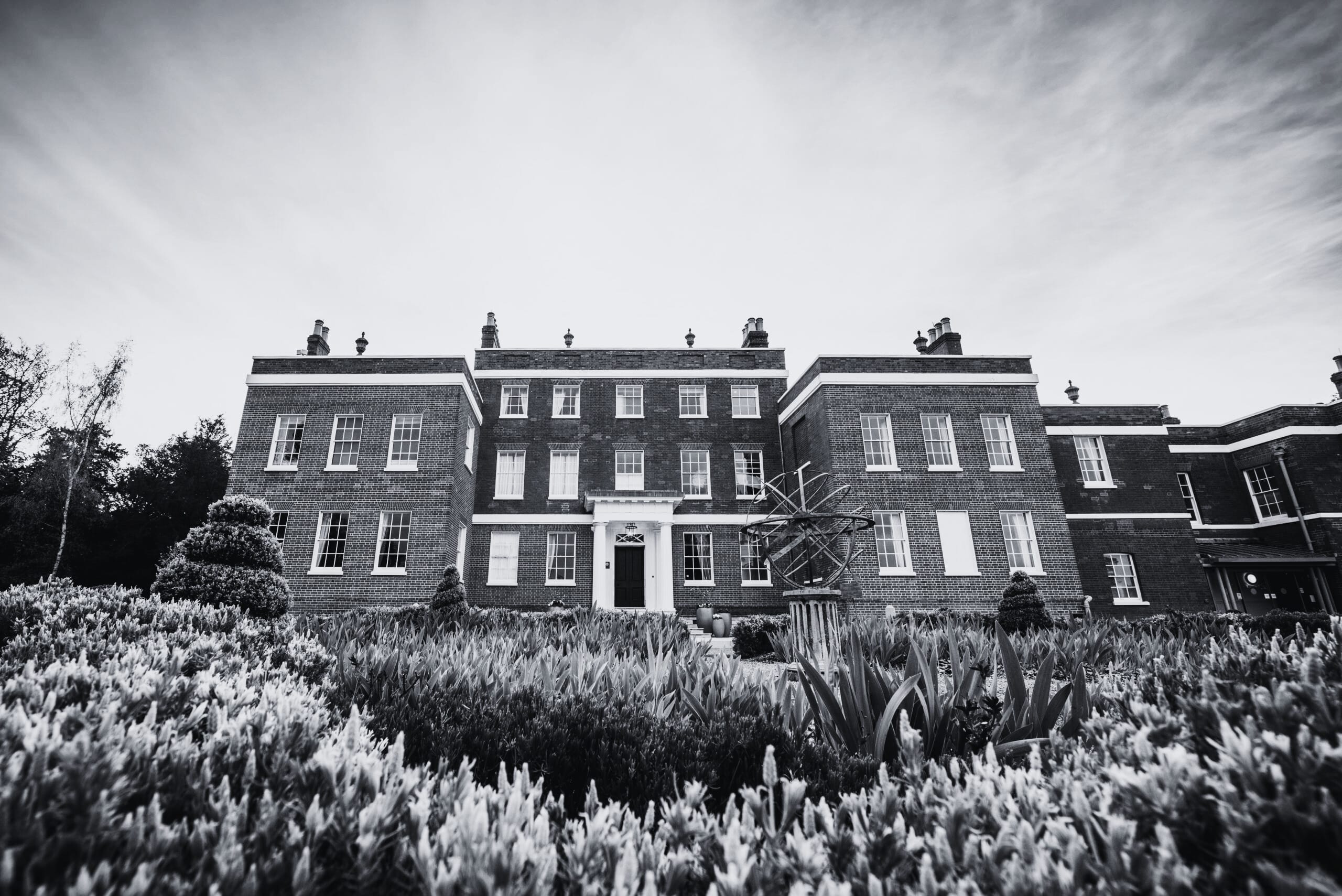
As these pages illustrate, there are some aspects of Hinxton Hall that we know quite a lot about. The main part of the Hall is Georgian, and was built in the mid-1700s. It was extended in the 1800s, including a dining room decorated with ancient Roman-style frescoes inspired by those that had been unearthed in Pompeii. In 2022, we commissioned author and specialist researcher Melanie Backe-Hansen to investigate the history of Hinxton Hall, with a focus on the sources of wealth which enabled its creation and expansion. Here are some of the key findings around the Hall's links to the East India Company; the transatlantic slave trade; and the abolitionist movement in this region.
At the time the extended Holden-Jones family were living in Hinxton Hall in the late 1700s, many people in England and in the local community in East Anglia were questioning how enslaved people on British plantations were being treated. Despite Britain’s leading role in transatlantic slavery, many people in the UK felt strongly enough to actively campaign against it. Saffron Walden and Cambridge, both within a few miles of Hinxton, were significant centres of anti-slavery, abolitionist activity, with many campaigners from established nonconformist and Quaker communities in this region. In addition to these local abolitionist campaigners, others in the movement were formerly enslaved people, who told their own stories through books and public speaking events.
Olaudah Equiano was one prominent figure associated with the campaign to abolish slavery. He was probably a member of the Igbo community in today’s Nigeria, and was captured and transported to North America, as a child during the 1750s. Here, Equiano was bought by Michael Henry Pascal, a lieutenant in the Royal Navy and renamed Gustavus Vassa. He was bought and sold by a number of owners over the course of around 10 years, working as part of a ship’s crew on voyages between Britain, Europe, and the Caribbean. In 1766, at the age of about 21, he was able to buy his freedom for £40, equivalent to around £6,000 today. As a free man, Equiano continued to work as a sailor, including on an expedition to the North Pole.
He eventually settled in Britain in the 1780s, and wrote about his life and experiences of slavery in The Interesting Narrative of the Life of Olaudah Equiano, or Gustavus Vassa, the African, which was published in 1789 and became a bestseller. The financing of this publication was supported by the prominent abolitionist campaigner, Peter Peckard, the Master of Magdalen College at the University of Cambridge, and by others including Reverend Joseph Gwennap, a Baptist Minister in Saffron Walden.
In 1792 Olaudah Equiano married Susannah Cullen, a woman from Soham in East Cambridgeshire. The couple lived in the area and had two daughters. Sadly, Susannah died aged 34 in 1796, and Equiano died a year later in 1797. Their older daughter Anna Maria, also died that year at the age of four. The only surviving member of the family, Joanna, inherited her father’s estate when she was 21. Joanna married Reverend Henry Bromley in 1827 and they moved to Clavering near Saffron Walden where Henry served as a minister at the Congregational Church until 1845 when he retired. In many ways, the presence of Joanna Bromley, living within 12 miles of Hinxton, represents the significance of this region in both the history of British slavery, and its abolition.
By delving deeper into the colonial history of Hinxton Hall, we can see how this rural part of South Cambridgeshire had a complex range of connections. From its direct relationship with the East India Company and the British Empire, to its location within a centre of abolitionist activity, Hinxton Hall was a witness to some of the major social and political movements that took place in the UK through the 1700 and 1800s.
Acknowledgements: With huge thanks to Melanie Backe-Hansen, the House Historian, for original historical research on Hinxton Hall; and to the many academic researchers and writers, and the National Trust, who prompted some of our thinking on this topic.
 Back to top